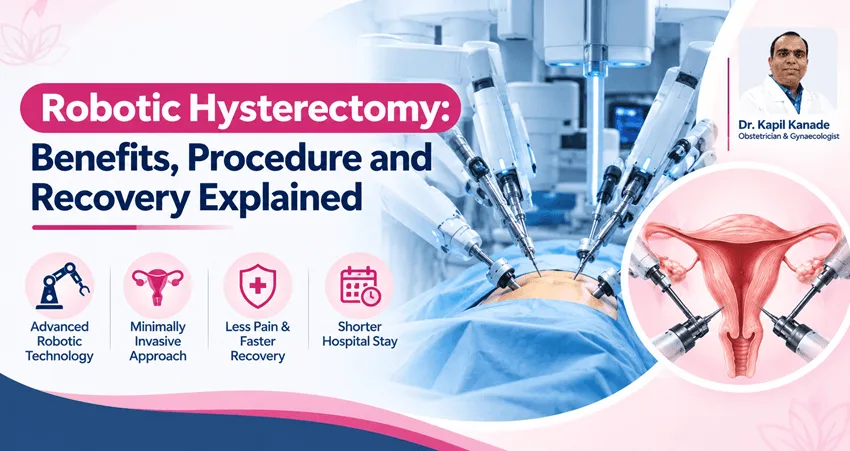
Robotic Hysterectomy: Benefits, Procedure and Recovery Explained
Robotic hysterectomy is an advanced, minimally invasive surgical approach used to remove the uterus in women who require surgical treatment for certain gynaecological conditions. The procedure combines a surgeon-controlled robotic system with magnified three-dimensional visualization and specialized instruments to help perform surgery through small incisions.
For women exploring robotic hysterectomy in Pune, understanding the procedure, potential benefits, recovery process and possible risks is essential before making a treatment decision. Dr. Kapil Kanade is an obstetrician and gynaecologist with over 23 years of experience, with specialized training in advanced laparoscopy in Germany. An individual assessment can help determine whether robotic-assisted surgery, conventional laparoscopy or another treatment is appropriate.
What Is Robotic Hysterectomy?
Robotic hysterectomy is a surgical procedure in which the uterus is removed using a robotic-assisted surgical system controlled by the surgeon. The system typically provides a magnified three-dimensional view of the surgical area and specialized instruments designed for precise, controlled movements.
The robotic system does not perform the operation independently. The surgeon controls the instruments throughout the procedure, while a trained surgical team assists at the patient's side.
Robotic hysterectomy is a minimally invasive alternative to open abdominal hysterectomy for selected patients. Whether it is suitable depends on the underlying condition, the patient's medical history, the complexity of the operation and the available surgical expertise.
Removing the uterus permanently ends menstruation and the ability to carry a pregnancy. Therefore, the decision to undergo hysterectomy requires careful consideration of the diagnosis, treatment alternatives and the patient's reproductive goals.
When Is Robotic Hysterectomy Recommended?
Robotic hysterectomy may be considered when a patient requires removal of the uterus and a minimally invasive approach is clinically appropriate. Several gynaecological conditions may lead to this recommendation.
Uterine Fibroids
Uterine fibroids are non-cancerous growths that develop in or around the uterus. Depending on their size and location, they may cause heavy menstrual bleeding, pelvic pressure, abdominal discomfort or other symptoms.
For women with severe symptoms who have completed their family or do not wish to preserve the uterus, hysterectomy may be considered when other suitable treatments are ineffective or inappropriate. Robotic assistance may be an option in selected cases, depending on the clinical circumstances.
Adenomyosis
Adenomyosis occurs when tissue similar to the lining of the uterus grows within the muscular wall of the uterus. It can cause painful periods, heavy bleeding and persistent pelvic discomfort.
When symptoms remain severe despite appropriate medical or other treatment, hysterectomy may be considered. The choice of surgical technique depends on the patient's condition and the surgeon's assessment.
Persistent Abnormal Uterine Bleeding
Abnormal uterine bleeding can result from fibroids, adenomyosis, hormonal changes and other conditions. The underlying cause should be investigated before deciding on surgery.
In selected patients with persistent or severe bleeding, hysterectomy may be appropriate when alternative treatments have not provided sufficient relief or are unsuitable.
Selected Cases of Endometriosis
Endometriosis occurs when tissue similar to the uterine lining grows outside the uterus and can cause pelvic pain, painful periods and fertility difficulties.
Hysterectomy may be considered for selected patients with persistent symptoms who do not wish to carry a future pregnancy. However, it does not necessarily eliminate all endometriosis-related pain, particularly when disease remains outside the uterus. Treatment should be individualized according to the extent of disease and the patient's goals.
Other Uterine Conditions
Certain other uterine conditions may require hysterectomy depending on the diagnosis, symptoms and investigation findings. If precancerous or cancerous disease is suspected or confirmed, treatment planning should involve the appropriate specialist and follow the requirements of the specific diagnosis.
How Does Robotic Hysterectomy Work?
Robotic hysterectomy is generally performed under general anaesthesia in a suitably equipped hospital. The procedure involves several stages, although the exact technique depends on the patient's condition and the type of hysterectomy planned.
1. Preoperative Assessment
Before surgery, the gynaecologist reviews the patient's symptoms, medical history, examination findings and relevant investigations. Blood tests, imaging and an anaesthesia assessment may be required.
The surgeon explains the reason for hysterectomy, the expected extent of surgery, available alternatives, possible risks and whether the cervix, fallopian tubes or ovaries are expected to be removed.
2. Small Incisions and Robotic Setup
The surgeon makes small abdominal incisions to introduce a camera and specialized surgical instruments. These instruments are connected to the robotic system, which the surgeon controls from a console.
A magnified three-dimensional view helps the surgeon visualize the pelvic structures during the operation.
3. Removal of the Uterus
The surgeon uses the robotic instruments to separate the uterus from its supporting tissues and associated blood vessels. The surgical team assists throughout the procedure, and nearby structures such as the bladder, ureters and bowel must be carefully protected.
The technique and extent of tissue removal depend on the patient's diagnosis and the planned operation.
4. Completion of Surgery
Once the uterus has been separated, it is removed using an appropriate technique. The surgeon checks the operative area, completes the necessary closure and ensures that the procedure has been completed safely.
The patient is then transferred to the recovery area for monitoring and postoperative care.
Key Benefits of Robotic Hysterectomy
Robotic hysterectomy may offer several advantages for appropriately selected patients. The benefits depend on the complexity of the operation, the surgeon's experience and the patient's medical condition.
Enhanced Three-Dimensional Visualization
The robotic platform typically provides a magnified three-dimensional view of the surgical area. This may help the surgeon visualize pelvic anatomy and work within confined spaces during selected procedures.
Enhanced visualization supports surgical technique but does not guarantee better outcomes in every patient.
Flexible and Controlled Instrument Movements
Robotic instruments are designed to provide a range of controlled movements that may be useful during delicate dissection and suturing.
These capabilities can help the surgeon perform selected complex procedures, depending on the anatomy and the surgeon's training with the system.
Small Abdominal Incisions
Robotic hysterectomy is generally performed through small incisions rather than the larger abdominal incision used in open surgery.
For suitable patients, this may result in smaller scars and reduced wound-related discomfort compared with open hysterectomy.
Potentially Less Postoperative Pain
Some patients experience less postoperative discomfort after minimally invasive hysterectomy than after open surgery. However, pain levels vary, and robotic surgery is not necessarily less painful than conventional laparoscopy.
Potentially Shorter Hospital Stay
A shorter hospital stay may be possible following an uncomplicated minimally invasive hysterectomy compared with open abdominal surgery.
The actual length of stay depends on the operation, the patient's health, recovery progress and the hospital's care protocol.
Earlier Return to Routine Activities
Some patients may return to light daily activities sooner after minimally invasive surgery than after open surgery. Complete recovery still takes time, and activity restrictions must be followed until the surgeon confirms that normal activities can safely resume.
Robotic Hysterectomy vs Conventional Laparoscopic Hysterectomy
Both robotic hysterectomy and conventional laparoscopic hysterectomy are minimally invasive surgical approaches. They use small incisions, a camera and specialized instruments, but the instruments and methods of control differ.
In conventional laparoscopy, the surgeon directly manipulates long surgical instruments while viewing the operation on a monitor. In robotic-assisted surgery, the surgeon controls specialized instruments from a console, typically with magnified three-dimensional visualization and greater instrument articulation.
Robotic assistance may be useful for selected technically demanding procedures. Conventional laparoscopy remains an effective option for many patients and may be more cost-effective.
Neither approach is automatically better for every patient. The appropriate method depends on the diagnosis, surgical complexity, surgeon's experience, hospital facilities, costs and expected outcomes.
Types of Hysterectomy That May Be Performed With Robotic Assistance
The type of hysterectomy depends on the underlying condition and the extent of surgery required. Robotic assistance may be used for selected procedures.
Total Hysterectomy
A total hysterectomy involves removing the uterus and cervix. The fallopian tubes and ovaries may be retained or removed separately, depending on the patient's clinical needs.
Supracervical Hysterectomy
A supracervical, or subtotal, hysterectomy removes the main body of the uterus while retaining the cervix. This approach is suitable only in selected circumstances after discussing its implications and limitations.
Hysterectomy With Removal of the Fallopian Tubes or Ovaries
The fallopian tubes or ovaries may be removed during the same operation when there is an appropriate clinical reason. The decision depends on the diagnosis, age, risk factors and the patient's preferences.
Removing both ovaries before natural menopause causes surgical menopause and may have important long-term health implications. The benefits and risks of ovarian removal should be discussed carefully before surgery.
Who May Be Suitable for Robotic Hysterectomy?
Robotic hysterectomy may be considered for women who require removal of the uterus and are suitable candidates for a minimally invasive approach.
The assessment may consider:
The underlying gynaecological condition and severity of symptoms.
The size and anatomy of the uterus.
Previous abdominal or pelvic surgeries.
The presence of adhesions or other complicating factors.
The patient's general health and suitability for anaesthesia.
The surgeon's expertise and availability of robotic facilities.
The patient's preferences and reproductive goals.
Some patients may be better suited to conventional laparoscopy or open surgery. A specialist assessment helps determine which approach offers the most appropriate balance of benefits and risks.
Recovery After Robotic Hysterectomy
Recovery after robotic hysterectomy varies according to the extent of surgery, the patient's health, the underlying condition and whether complications occur. Many patients gradually resume light activities during the first few weeks, while full recovery often takes several weeks.
The recovery stages below are general guidance. The treating surgeon's instructions should determine the actual recovery plan.
First Few Days After Surgery
Patients may experience mild abdominal discomfort, tiredness, bloating or shoulder discomfort caused by the gas used during laparoscopy. The medical team may recommend prescribed pain relief, gentle walking and appropriate wound care.
Patients should follow discharge instructions, take medicines as directed and attend scheduled follow-up appointments.
The First Two Weeks
Energy levels may improve gradually, although fatigue can persist. Light walking may be encouraged, while heavy lifting and strenuous exercise should be avoided.
The timing of return to work depends on the patient's progress and the physical demands of the job.
The Following Weeks
Many patients gradually resume routine activities over the next several weeks. Internal healing continues even when the abdominal incisions appear healed.
Patients should avoid vaginal intercourse, tampons and activities restricted by the surgeon until healing has been assessed and clearance has been provided.
Follow-Up and Continued Recovery
Follow-up appointments allow the surgical team to assess healing and address any concerns. Patients should discuss persistent symptoms, medication needs and the safe timing of returning to exercise or other activities.
Fever, worsening abdominal pain, heavy vaginal bleeding, foul-smelling discharge, difficulty breathing or other concerning symptoms after surgery require prompt medical assessment.
Risks and Limitations of Robotic Hysterectomy
Robotic hysterectomy is a major surgical procedure and is not risk-free. Potential complications include bleeding, infection, blood clots, anaesthesia-related complications and injury to nearby organs such as the bladder, ureters or bowel.
In some cases, the surgeon may need to convert the procedure to open surgery if required for safety. Risks depend on the patient's medical history, the complexity of the operation and the underlying condition.
Robotic surgery may also involve additional costs and is not available at every hospital. The use of robotic technology does not guarantee fewer complications or better outcomes than conventional laparoscopy.
Removing the uterus permanently ends the ability to carry a pregnancy. The surgeon should explain the expected benefits, limitations, alternatives and possible complications before obtaining informed consent.
Life After Robotic Hysterectomy
Many patients gradually return to their usual routines after recovery. The long-term experience depends on the underlying condition, the type of hysterectomy and whether the ovaries are retained.
Menstruation stops after the uterus is removed, and pregnancy is no longer possible. If the ovaries remain, they may continue producing hormones until natural menopause. If both ovaries are removed before menopause, surgical menopause occurs.
Patients should discuss any concerns about hormonal changes, sexual health, pelvic symptoms, emotional wellbeing and long-term health with their treating clinician.
Why Consider Dr. Kapil Kanade for Hysterectomy Consultation in Pune?
Dr. Kapil Kanade is an obstetrician and gynaecologist with over 23 years of experience. His professional profile highlights a fellowship in advanced laparoscopy in Germany, a fellowship in infertility and a role as Head of Department at Manipal Hospital, Kharadi.
His profile includes advanced laparoscopic and robotic gynaecological surgery. This background is relevant for women seeking specialist evaluation for uterine conditions that may require minimally invasive surgery.
The choice of robotic hysterectomy should be based on an individual assessment rather than the technology alone. During consultation, the patient's diagnosis, treatment alternatives, surgical suitability, potential risks and expected recovery should be discussed.
Patients should also confirm the hospital where the operation would take place and whether the required robotic surgical system and support team are available.
Cost of Robotic Hysterectomy
The cost of robotic hysterectomy varies according to the hospital, the complexity of the operation, the surgeon's fees, anaesthesia, investigations, medicines, length of stay and postoperative care.
Robotic-assisted procedures may cost more than some conventional laparoscopic approaches because of equipment and operating expenses. The final estimate depends on the patient's medical needs and the facilities available.
Patients should request an itemized estimate and confirm insurance coverage, preauthorization requirements and exclusions before scheduling surgery.
Book a Gynaecological Consultation in Pune
Women who have been advised to undergo hysterectomy or want to understand their treatment options can seek a gynaecological assessment to discuss the most appropriate surgical approach.
Dr. Kapil Kanade's clinic can be contacted to enquire about consultation availability and evaluation for conditions that may require hysterectomy.
Doctor: Dr. Kapil Kanade, Obstetrician & Gynaecologist
Contact Number: +91 9697973636
Consultation Location: Sunshine Hospital, 1st Floor, Marvel Fuego, 1090, above Nexa Showroom, Amanora Park Town, Hadapsar, Pune, Maharashtra 411028.
Please confirm the current appointment schedule, consultation location and availability of robotic surgical facilities with the clinic before proceeding.
Conclusion
Robotic hysterectomy is a minimally invasive surgical option for selected women who require removal of the uterus for conditions such as symptomatic fibroids, adenomyosis or persistent abnormal uterine bleeding.
Potential benefits include small incisions, enhanced surgical visualization and the possibility of a shorter hospital stay compared with open surgery in suitable cases. Recovery varies between patients, and robotic surgery carries risks and costs that should be understood before treatment.
For women exploring robotic hysterectomy in Pune, Dr. Kapil Kanade's experience in gynaecology and specialized training in advanced laparoscopy provide a starting point for discussing appropriate treatment options. A thorough medical assessment helps determine whether robotic-assisted surgery, conventional laparoscopy or another approach is most suitable for the patient's individual needs.