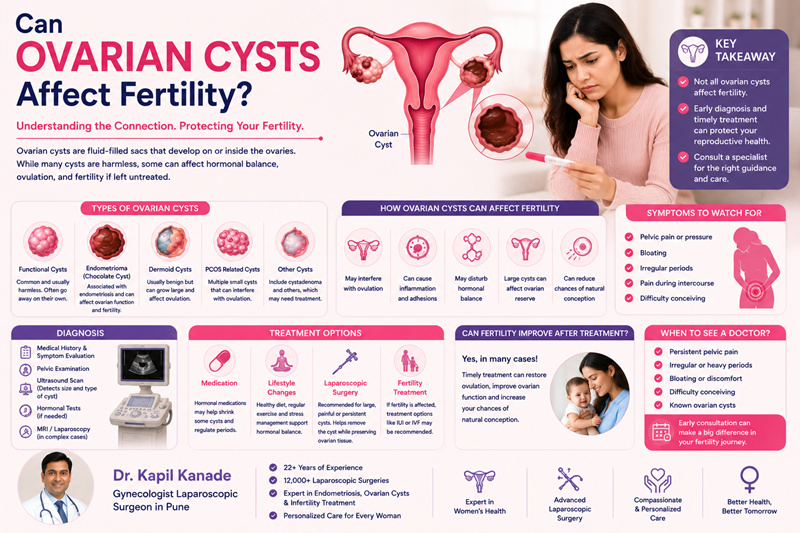
Can Ovarian Cysts Affect Fertility?
Ovarian cysts are common among women of reproductive age and are often discovered during routine gynecological examinations. While many ovarian cysts are harmless and disappear on their own, some types may affect fertility and reproductive health.
Understanding which ovarian cysts can impact fertility is important for women who are planning pregnancy or experiencing difficulty conceiving.
If you have been diagnosed with an ovarian cyst or are concerned about fertility, consulting an experienced gynecologist laparoscopic surgeon in Pune can help determine the best course of action.
What are Ovarian Cysts?
Ovarian cysts are fluid-filled sacs that develop on or inside the ovaries.
Many ovarian cysts form naturally during the menstrual cycle and disappear without treatment. However, certain cysts may require medical monitoring or intervention.
Do All Ovarian Cysts Affect Fertility?
No.
Most ovarian cysts do not affect fertility.
In fact, many women with ovarian cysts conceive naturally without any complications.
The impact on fertility depends on:
- Type of cyst
- Size of the cyst
- Underlying condition
- Ovarian health
- Presence of endometriosis or PCOD
Types of Ovarian Cysts
Functional Cysts
Functional cysts are the most common type.
They develop during ovulation and usually disappear naturally.
These cysts generally do not affect fertility.
Chocolate Cysts (Endometriomas)
Chocolate cysts are caused by endometriosis.
These cysts may:
- Damage ovarian tissue
- Affect egg quality
- Reduce ovarian reserve
- Impact fertility
Women with chocolate cysts often require evaluation by a gynec laparoscopic surgeon in Pune.
Dermoid Cysts
Dermoid cysts contain tissues such as hair, skin, or fat.
Most dermoid cysts do not directly affect fertility unless they become very large.
Cystadenomas
These cysts develop from ovarian tissue and can sometimes grow significantly.
Large cysts may cause discomfort and occasionally require surgical treatment.
PCOD-Related Ovarian Cysts
Women with PCOD often develop multiple small ovarian cysts.
PCOD may affect fertility because it interferes with normal ovulation.
How Can Ovarian Cysts Affect Fertility?
Certain ovarian cysts may interfere with fertility in different ways.
Disruption of Ovulation
Some cysts can interfere with the release of eggs from the ovaries.
Reduced Ovarian Reserve
Large cysts or repeated ovarian surgeries may affect the number of healthy eggs available.
Pelvic Adhesions
Conditions such as endometriosis may lead to scar tissue formation that affects reproductive organs.
Hormonal Imbalance
PCOD-related cysts may disrupt hormonal regulation and ovulation.
Impact on Egg Quality
Inflammation associated with endometriosis and chocolate cysts may affect egg quality.
Ovarian Cysts and Endometriosis
Endometriosis is a common cause of fertility-related ovarian cysts.
Women with endometriosis may develop chocolate cysts that can:
- Cause pelvic pain
- Affect ovarian function
- Reduce fertility
- Lead to scar tissue formation
Early diagnosis and treatment can improve reproductive outcomes.
Ovarian Cysts and Chocolate Cysts
Chocolate cysts are among the ovarian cysts most likely to affect fertility.
These cysts:
- Develop due to endometriosis
- Contain old blood
- May damage ovarian tissue
- Can interfere with conception
Timely evaluation is important for women planning pregnancy.
Ovarian Cysts and PCOD
Many women confuse ovarian cysts with PCOD.
Ovarian Cysts
Usually involve one or more fluid-filled sacs on the ovary.
PCOD
A hormonal condition characterized by multiple small ovarian cysts and irregular ovulation.
Both conditions may affect fertility but require different treatment approaches.
Symptoms of Ovarian Cysts
Some ovarian cysts cause no symptoms.
When symptoms occur, they may include:
Pelvic Pain
Pain or pressure in the lower abdomen.
Bloating
Abdominal swelling or fullness.
Irregular Periods
Changes in menstrual patterns.
Pain During Intercourse
Discomfort during intimacy.
Difficulty Conceiving
Particularly when associated with endometriosis or PCOD.
How are Ovarian Cysts Diagnosed?
Medical History
Review of symptoms and reproductive health.
Pelvic Examination
Assessment of pelvic abnormalities.
Ultrasound Scan
The most common method for identifying ovarian cysts.
Blood Tests
May be recommended in selected cases.
Advanced Imaging
MRI may be useful for complex cysts.
Treatment Options for Ovarian Cysts
Treatment depends on:
- Type of cyst
- Size of the cyst
- Symptoms
- Fertility goals
- Age of the patient
Observation and Monitoring
Many cysts resolve naturally and only require follow-up.
Medical Management
Medications may be prescribed to manage symptoms.
Fertility-Focused Care
Women planning pregnancy may require specialized reproductive evaluation.
Laparoscopic Surgery
Laparoscopic surgery may be recommended for:
- Large cysts
- Persistent cysts
- Symptomatic cysts
- Chocolate cysts
- Fertility-related concerns
Benefits include:
- Smaller incisions
- Faster recovery
- Less pain
- Minimal scarring
- Preservation of fertility
Why Choose Dr. Kapil Kanade?
Dr. Kapil Kanade is a highly experienced gynecologist laparoscopic surgeon in Pune with expertise in advanced minimally invasive gynecological procedures.
Areas of Expertise
- Ovarian Cyst Treatment
- Chocolate Cyst Surgery
- Endometriosis Treatment
- PCOD Management
- Infertility Treatment
- Advanced Laparoscopic Surgery
Highlights
- 22+ Years of Experience
- 12,000+ Laparoscopic Surgeries
- Advanced Minimally Invasive Techniques
- Personalized Women's Healthcare
When Should You Consult a Specialist?
Seek medical advice if you experience:
- Persistent pelvic pain
- Ovarian cysts
- Difficulty conceiving
- Irregular periods
- Symptoms of endometriosis
- Symptoms of PCOD
Early diagnosis can help protect fertility and prevent complications.
Book a Consultation
If you have ovarian cysts and are concerned about fertility, consult Dr. Kapil Kanade for expert diagnosis and personalized treatment. Early intervention can help preserve reproductive health and improve your chances of a successful pregnancy.