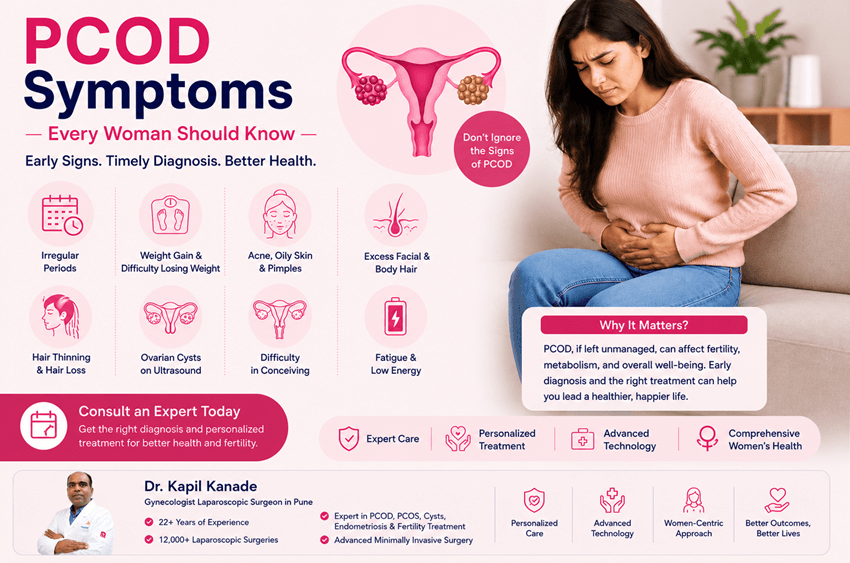
PCOD Symptoms Every Woman Should Know
Polycystic Ovarian Disease (PCOD) is one of the most common hormonal disorders affecting women of reproductive age. Unfortunately, many women ignore the early symptoms of PCOD, leading to delayed diagnosis and treatment.
Recognizing the warning signs early can help prevent complications related to fertility, hormonal imbalance, ovarian cysts, and overall reproductive health.
If you are experiencing irregular periods or unexplained hormonal changes, consulting an experienced gynecologist laparoscopic surgeon in Pune can help identify the underlying cause and provide appropriate treatment.
What is PCOD?
PCOD (Polycystic Ovarian Disease) is a condition in which the ovaries produce multiple immature eggs that may develop into small cysts. These cysts can affect normal ovulation and cause hormonal imbalances.
PCOD is becoming increasingly common due to lifestyle changes, stress, insulin resistance, and genetic factors.
Why is Early Detection of PCOD Important?
Early diagnosis can help women:
- Improve fertility outcomes
- Regulate menstrual cycles
- Reduce hormonal imbalance
- Prevent excessive weight gain
- Lower the risk of diabetes
- Manage ovarian cysts effectively
- Improve overall quality of life
1. Irregular Menstrual Periods
One of the earliest and most common symptoms of PCOD is irregular periods.
Women may experience:
- Delayed periods
- Missed periods
- Very light periods
- Heavy menstrual bleeding
Irregular ovulation often causes these menstrual disturbances.
2. Unexplained Weight Gain
Many women with PCOD struggle with sudden weight gain, particularly around the abdomen.
Hormonal imbalance and insulin resistance make it difficult to maintain a healthy weight, even with regular exercise.
3. Difficulty Losing Weight
Women with PCOD often find it challenging to lose weight despite following healthy diets and exercise routines.
This is commonly associated with insulin resistance.
4. Excess Facial and Body Hair
Increased levels of male hormones (androgens) may cause:
- Facial hair growth
- Chin hair
- Upper lip hair
- Excessive body hair
This condition is known as hirsutism.
5. Acne and Oily Skin
Persistent acne beyond teenage years can be a sign of hormonal imbalance caused by PCOD.
Many women experience:
- Frequent breakouts
- Oily skin
- Acne around the jawline and chin
6. Hair Thinning and Hair Loss
Hormonal changes associated with PCOD can lead to:
- Hair thinning
- Excessive hair fall
- Reduced hair volume
Early treatment may help control hair loss.
7. Difficulty Getting Pregnant
PCOD can interfere with ovulation, making conception difficult for some women.
Women planning pregnancy should seek timely evaluation from a gynec laparoscopic surgeon in Pune for fertility-focused treatment options.
8. Ovarian Cysts Detected on Ultrasound
Many women with PCOD have multiple small ovarian cysts visible on ultrasound examinations.
While these cysts are usually harmless, regular monitoring is important to assess ovarian health.
PCOD and Ovarian Cysts
Ovarian cysts are commonly associated with PCOD. However, not every ovarian cyst indicates PCOD.
An experienced gynecologist can determine the type of cyst and recommend appropriate treatment if necessary.
PCOD vs Endometriosis
PCOD and endometriosis are different gynecological conditions.
PCOD
- Hormonal disorder
- Irregular ovulation
- Weight gain
- Fertility issues
Endometriosis
- Growth of uterine-like tissue outside the uterus
- Severe pelvic pain
- Painful periods
- Fertility challenges
Both conditions require specialized diagnosis and management.
Understanding Chocolate Cysts
A chocolate cyst is a type of ovarian cyst commonly associated with endometriosis.
These cysts contain old blood and may affect fertility if left untreated.
Women experiencing pelvic pain, infertility, or menstrual abnormalities should seek evaluation from a gynecologist laparoscopic surgeon in Pune.
When Should You Consult a Specialist?
You should consult a doctor if you experience:
- Irregular periods
- Excessive hair growth
- Persistent acne
- Hair loss
- Weight gain
- Difficulty conceiving
- Pelvic pain
- Suspected ovarian cysts
Early treatment often leads to better long-term outcomes.
Why Choose Dr. Kapil Kanade?
Dr. Kapil Kanade is a highly experienced gynecologist laparoscopic surgeon in Pune with over 22 years of expertise in women's healthcare.
Expertise Includes
- PCOD Management
- Ovarian Cyst Treatment
- Endometriosis Care
- Chocolate Cyst Treatment
- Fertility Evaluation
- Advanced Laparoscopic Surgery
Key Highlights
- 22+ Years of Experience
- 12,000+ Laparoscopic Surgeries
- Advanced Minimally Invasive Techniques
- Personalized Treatment Plans
Book a Consultation
If you are experiencing symptoms of PCOD, consult Dr. Kapil Kanade for expert diagnosis and personalized treatment. Early intervention can help prevent complications and improve reproductive health.