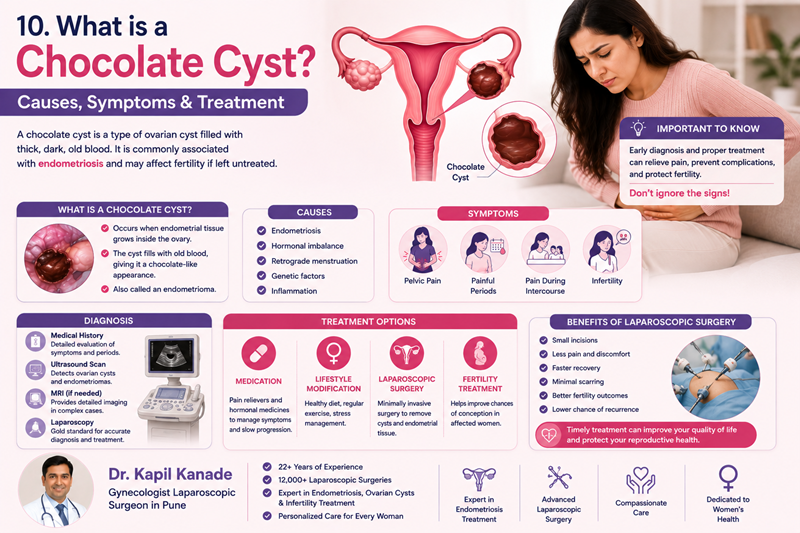
What is a Chocolate Cyst? Causes, Symptoms & Treatment
A chocolate cyst is a type of ovarian cyst commonly associated with endometriosis. These cysts can cause pelvic pain, menstrual discomfort, fertility problems, and may affect ovarian function if left untreated.
Many women are unaware they have a chocolate cyst until they experience symptoms or undergo evaluation for infertility. Early diagnosis and treatment are important to preserve reproductive health and prevent complications.
If you are experiencing pelvic pain, ovarian cysts, or fertility concerns, consulting an experienced gynecologist laparoscopic surgeon in Pune can help ensure timely diagnosis and appropriate treatment.
What is a Chocolate Cyst?
A chocolate cyst, medically known as an endometrioma, is a cyst that forms on the ovary due to endometriosis.
It gets its name because it contains old, dark blood that resembles melted chocolate.
Chocolate cysts develop when endometrial tissue grows on or inside the ovary and repeatedly bleeds during menstrual cycles.
How Does a Chocolate Cyst Form?
The condition is closely linked to endometriosis.
When endometrial-like tissue grows outside the uterus and attaches to the ovaries, repeated bleeding may gradually accumulate and form a cyst.
Over time, the cyst enlarges and fills with old blood, resulting in a chocolate cyst.
Causes of Chocolate Cysts
The exact cause is not always known, but common contributing factors include:
Endometriosis
The primary cause of chocolate cyst formation.
Hormonal Changes
Hormonal fluctuations may promote the growth of endometriosis tissue.
Genetic Factors
Women with a family history of endometriosis may have a higher risk.
Immune System Factors
Certain immune responses may contribute to abnormal tissue growth.
Common Symptoms of Chocolate Cysts
Some women may not experience symptoms initially.
However, common symptoms include:
Pelvic Pain
Persistent or recurring pain in the lower abdomen.
Painful Periods
Severe menstrual cramps that worsen over time.
Pain During Intercourse
Discomfort during or after intimacy.
Heavy Menstrual Bleeding
Abnormally heavy or prolonged periods.
Difficulty Conceiving
Chocolate cysts may affect fertility and ovarian function.
Chronic Pelvic Discomfort
Persistent pressure or heaviness in the pelvic region.
Chocolate Cyst and Fertility
One of the major concerns associated with chocolate cysts is infertility.
Chocolate cysts may affect fertility by:
- Reducing ovarian reserve
- Affecting egg quality
- Causing inflammation
- Distorting pelvic anatomy
- Interfering with ovulation
Timely treatment can help improve fertility outcomes.
Chocolate Cyst vs Other Ovarian Cysts
Not all ovarian cysts are chocolate cysts.
Functional Ovarian Cysts
Usually develop during normal ovulation and often disappear naturally.
Dermoid Cysts
Contain tissues such as hair, skin, or fat.
Chocolate Cysts
Develop due to endometriosis and contain old blood.
Proper diagnosis is essential to determine the type of cyst and the best treatment approach.
Chocolate Cysts and Endometriosis
Chocolate cysts are considered one of the most common manifestations of endometriosis.
Women with chocolate cysts often have underlying endometriosis affecting other pelvic organs as well.
Symptoms may include:
- Severe menstrual pain
- Chronic pelvic pain
- Fertility problems
- Pain during intercourse
An experienced gynec laparoscopic surgeon in Pune can evaluate the extent of disease and recommend suitable treatment.
How is a Chocolate Cyst Diagnosed?
Diagnosis may involve:
Medical History
Review of symptoms and menstrual patterns.
Pelvic Examination
Assessment of pelvic tenderness and abnormalities.
Ultrasound Scan
One of the most common methods for detecting ovarian cysts and chocolate cysts.
MRI Scan
May be recommended in complex cases.
Diagnostic Laparoscopy
Provides direct visualization and confirmation of endometriosis and chocolate cysts.
Treatment Options for Chocolate Cysts
Treatment depends on:
- Age
- Symptoms
- Size of the cyst
- Fertility goals
- Severity of endometriosis
Observation and Monitoring
Small cysts without significant symptoms may be monitored regularly.
Medications
Hormonal treatment may help control symptoms and slow disease progression.
Fertility-Focused Treatment
Women planning pregnancy may require specialized fertility management.
Laparoscopic Surgery
Laparoscopic surgery is one of the most effective treatments for symptomatic chocolate cysts.
The procedure helps:
- Remove the cyst
- Preserve healthy ovarian tissue
- Reduce pain
- Improve fertility
- Treat associated endometriosis
Benefits include:
- Smaller incisions
- Less pain
- Faster recovery
- Minimal scarring
When is Surgery Recommended?
Surgery may be advised if:
- The cyst is large
- Symptoms are severe
- Fertility is affected
- The cyst continues to grow
- Endometriosis is extensive
A gynecologist laparoscopic surgeon in Pune can determine whether surgery is necessary.
Chocolate Cysts, PCOD and Women's Health
Many women confuse chocolate cysts with PCOD-related ovarian cysts.
Chocolate Cyst
- Caused by endometriosis
- Contains old blood
- Associated with pelvic pain
- May affect fertility
PCOD
- Hormonal disorder
- Multiple small ovarian cysts
- Irregular ovulation
- Menstrual disturbances
Accurate diagnosis is essential because treatment differs significantly.
Why Choose Dr. Kapil Kanade?
Dr. Kapil Kanade is a highly experienced gynecologist laparoscopic surgeon in Pune specializing in advanced minimally invasive gynecological procedures.
Areas of Expertise
- Chocolate Cyst Treatment
- Endometriosis Treatment
- Ovarian Cyst Surgery
- PCOD Management
- Fertility Preservation
- Advanced Laparoscopic Surgery
Highlights
- 22+ Years of Experience
- 12,000+ Laparoscopic Surgeries
- Advanced Minimally Invasive Techniques
- Personalized Women's Healthcare
When Should You Consult a Specialist?
Seek medical advice if you experience:
- Severe menstrual pain
- Chronic pelvic pain
- Ovarian cysts
- Fertility issues
- Pain during intercourse
- Symptoms of endometriosis
Early treatment can help preserve fertility and prevent complications.
Book a Consultation
If you have been diagnosed with a chocolate cyst or are experiencing symptoms of endometriosis, consult Dr. Kapil Kanade for expert diagnosis and personalized treatment. Early intervention can improve fertility, reduce pain, and protect long-term reproductive health.