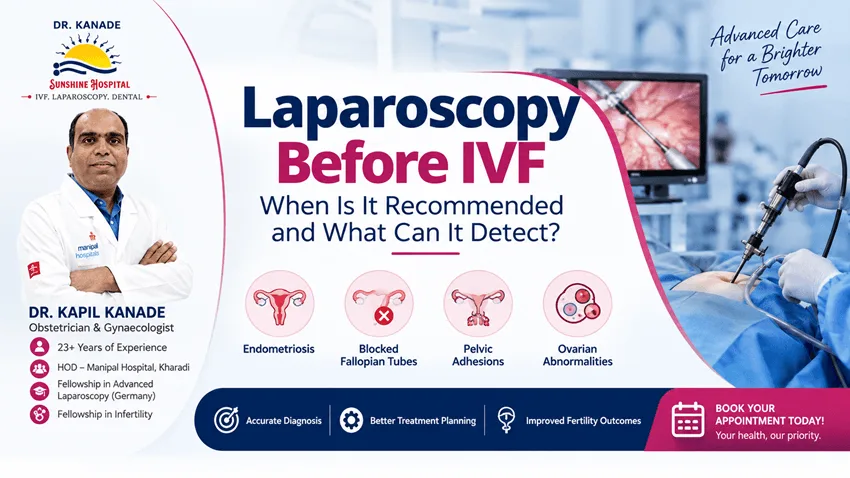
Laparoscopy Before IVF: When Is It Recommended and What Can It Detect?
For couples undergoing fertility treatment, IVF can be an important step toward achieving pregnancy. However, before starting IVF, doctors may recommend evaluating the uterus, fallopian tubes, ovaries and pelvic organs to understand whether there are underlying conditions that could affect fertility treatment.
Laparoscopy is a minimally invasive surgical procedure that may be recommended in selected women before IVF when there is a possibility of conditions such as endometriosis, pelvic adhesions, tubal problems or other abnormalities.
Whether laparoscopy is necessary before IVF depends on the woman's medical history, symptoms, previous fertility treatments, examination findings and other investigations.
What Is Laparoscopy?
Laparoscopy is a minimally invasive surgical procedure used to examine the organs inside the abdomen and pelvis.
A small camera called a laparoscope is inserted through a small incision, allowing the surgeon to directly examine structures such as the uterus, fallopian tubes, ovaries and surrounding pelvic tissues.
When required, certain conditions identified during the procedure may also be treated during the same surgery.
Is Laparoscopy Required Before Every IVF Treatment?
No. Laparoscopy is not routinely required before every IVF cycle.
Many women can proceed with IVF without undergoing laparoscopy when their evaluation does not indicate a need for surgical investigation.
A fertility specialist may consider laparoscopy when there are specific symptoms, medical history findings, previous surgery, suspected endometriosis, tubal abnormalities, pelvic adhesions or unexplained fertility problems.
The decision should be individualized after reviewing the patient's fertility history and investigations.
When Is Laparoscopy Before IVF Recommended?
1. Suspected Endometriosis
Endometriosis can affect the ovaries, fallopian tubes and surrounding pelvic tissues. In some women, it may be associated with pelvic pain and fertility difficulties.
Laparoscopy allows the surgeon to directly examine the pelvis and identify endometriosis lesions or related pelvic changes.
2. Suspected Blocked or Damaged Fallopian Tubes
Problems involving the fallopian tubes can contribute to infertility.
While tests such as HSG and other imaging methods can provide important information about the tubes, laparoscopy may be considered in selected cases when tubal disease or surrounding pelvic abnormalities are suspected.
3. Pelvic Adhesions
Previous pelvic surgery, infection, endometriosis or other conditions can sometimes lead to adhesions.
These bands of scar tissue can affect the normal relationship between pelvic organs. Laparoscopy allows direct assessment of the pelvic cavity and may help identify adhesions.
4. Unexplained Infertility
When routine fertility investigations do not clearly identify a cause of infertility, a doctor may consider additional evaluation in selected patients.
Laparoscopy may help identify pelvic conditions that are not always visible through routine investigations.
5. Previous Pelvic or Abdominal Surgery
A history of previous pelvic or abdominal surgery may increase the possibility of adhesions or other pelvic changes.
Depending on the patient's history and fertility evaluation, the fertility specialist may consider whether laparoscopy could provide useful additional information before IVF.
6. Persistent Pelvic Pain
Women experiencing persistent pelvic pain, particularly when associated with menstrual pain or other symptoms suggestive of endometriosis, may require further evaluation.
In selected cases, laparoscopy can help identify the underlying pelvic condition.
7. Ovarian or Pelvic Abnormalities
Certain ovarian or pelvic findings may require further evaluation before fertility treatment.
Depending on the size, appearance, symptoms and clinical situation, the doctor may recommend additional imaging, observation or surgical evaluation.
What Can Laparoscopy Detect Before IVF?
Laparoscopy can allow direct visualization of several pelvic structures and may help identify conditions such as:
- Endometriosis
- Pelvic adhesions
- Certain fallopian tube abnormalities
- Pelvic inflammation or scarring
- Ovarian abnormalities
- Pelvic anatomical abnormalities
- Other conditions affecting the reproductive organs
The exact findings depend on the individual patient's condition.
How Can Laparoscopy Help in Fertility Evaluation?
One of the important advantages of laparoscopy is that it allows the surgeon to directly inspect the pelvic organs rather than relying only on imaging or indirect tests.
In selected cases, the procedure may provide additional information about conditions that could otherwise remain undetected.
If a treatable abnormality is identified, the surgeon may discuss appropriate treatment options.
However, laparoscopy is still a surgical procedure, so its potential benefits, risks and necessity should be carefully considered before proceeding.
Laparoscopy and IVF: What Is the Difference?
IVF and laparoscopy have different purposes.
Laparoscopy is a minimally invasive surgical procedure used to examine and, when appropriate, treat certain pelvic conditions.
IVF, or in vitro fertilization, is an assisted reproductive treatment in which eggs and sperm are used to create embryos outside the body before an embryo is transferred into the uterus.
Laparoscopy may be recommended before IVF in selected patients when there is a clinical reason to investigate or treat a pelvic condition.
What Happens During Laparoscopy?
Before the procedure, the doctor reviews the patient's medical history, fertility investigations and overall health.
During laparoscopy, the surgeon uses a small camera to examine the pelvic organs through small incisions.
Depending on the findings and the planned procedure, certain conditions may be treated during the same surgical session.
After surgery, the patient is monitored and given appropriate recovery instructions.
Recovery After Laparoscopic Surgery
Recovery depends on the type and extent of the procedure performed and the patient's overall health.
Because laparoscopy uses small incisions, recovery may be easier for many patients compared with traditional open abdominal surgery, although recovery varies from person to person.
Your doctor will provide specific instructions regarding activity, medication, follow-up and when fertility treatment can be considered after surgery.
Does Everyone With Infertility Need Laparoscopy?
No.
Laparoscopy is not necessary for every woman undergoing infertility treatment or IVF.
The decision depends on factors such as:
- Age
- Duration of infertility
- Previous fertility treatments
- Pelvic pain
- Suspected endometriosis
- Previous pelvic surgery
- Tubal findings
- Previous medical history
- Results of ultrasound and other fertility investigations
A fertility specialist can determine whether laparoscopy is appropriate for an individual patient.
Why Choose Dr. Kapil Kanade for Laparoscopic Fertility Care in Pune?
22+ Years of Experience
Dr. Kapil Kanade is an experienced Obstetrician & Gynecologist with more than 22 years of experience in gynecological laparoscopic surgery.
Advanced Laparoscopic Expertise
He has completed a fellowship in advanced laparoscopy from Germany and also has a fellowship in infertility, supporting his expertise in minimally invasive gynecological and fertility-related procedures.
Extensive Surgical Experience
The website states that Dr. Kanade has performed more than 12,000 laparoscopic surgeries across 70+ hospitals in Pune and Navi Mumbai.
Fertility-Focused Surgical Care
His listed surgical expertise includes fertility-enhancing procedures such as diagnostic hystero-laparoscopy, hysteroscopy, endometriosis treatment, tubal procedures, ovarian cyst removal and other gynecological surgeries.
Personalized Treatment Planning
Every infertility case is different. The need for laparoscopy before IVF should be determined after evaluating the patient's symptoms, medical history, fertility investigations and previous treatments.
Minimally Invasive Approach
When laparoscopy is clinically appropriate, the minimally invasive approach can allow the surgeon to examine and treat selected pelvic conditions through small incisions.
When Should You Consult a Laparoscopic Fertility Specialist?
Consider consulting a gynecologist or fertility specialist if you have been experiencing difficulty conceiving, recurrent pelvic pain, suspected endometriosis, abnormal tubal findings, previous pelvic surgery or unexplained infertility.
A specialist can review your fertility history and existing investigations and determine whether additional evaluation, including laparoscopy, may be appropriate before IVF.
Frequently Asked Questions
1. Is laparoscopy necessary before IVF?
No. Laparoscopy is not required before every IVF cycle. It may be recommended in selected patients when there is a suspected pelvic condition or another clinical reason for further evaluation.
2. Why is laparoscopy done before IVF?
Laparoscopy may be considered to identify conditions such as endometriosis, pelvic adhesions, tubal abnormalities or other pelvic problems that may be relevant to fertility treatment.
3. Can laparoscopy detect endometriosis?
Yes. Laparoscopy allows the surgeon to directly examine the pelvic cavity and identify endometriosis lesions and related pelvic changes.
4. Can laparoscopy check blocked fallopian tubes?
Laparoscopy can help evaluate the fallopian tubes and surrounding pelvic structures. Depending on the situation, additional tests may also be used to assess tubal patency.
5. Can laparoscopy treat problems found during the procedure?
In selected cases, certain abnormalities identified during laparoscopy may be treated during the same surgical procedure. The treatment depends on the condition and the surgeon's assessment.
6. How long does it take to recover from laparoscopy?
Recovery varies depending on the type and extent of surgery. Your doctor will provide individualized instructions about activity, medication and follow-up.
7. Will laparoscopy improve IVF success?
The benefit depends on the underlying condition and the individual patient. Laparoscopy may be useful when a specific pelvic condition is suspected or identified, but it is not a routine requirement for every IVF patient.
8. Can I undergo IVF after laparoscopy?
In selected cases, IVF can be planned after recovery from laparoscopic treatment. The appropriate timing depends on the procedure performed and the patient's individual fertility plan.
9. Who should I consult for laparoscopy before IVF in Pune?
You can consult Dr. Kapil Kanade, a gynecological laparoscopic and robotic surgeon in Pune with expertise in infertility-related and minimally invasive gynecological procedures.
Conclusion
Laparoscopy before IVF is not required for every patient, but it can be an important diagnostic and treatment option in selected cases.
When conditions such as endometriosis, pelvic adhesions, tubal abnormalities or unexplained pelvic problems are suspected, laparoscopy may provide valuable information that can help guide fertility treatment.
If you are considering IVF and have a history of pelvic pain, endometriosis, previous surgery, tubal problems or unexplained infertility, consult an experienced gynecologist and fertility specialist to understand whether laparoscopy is appropriate for you.