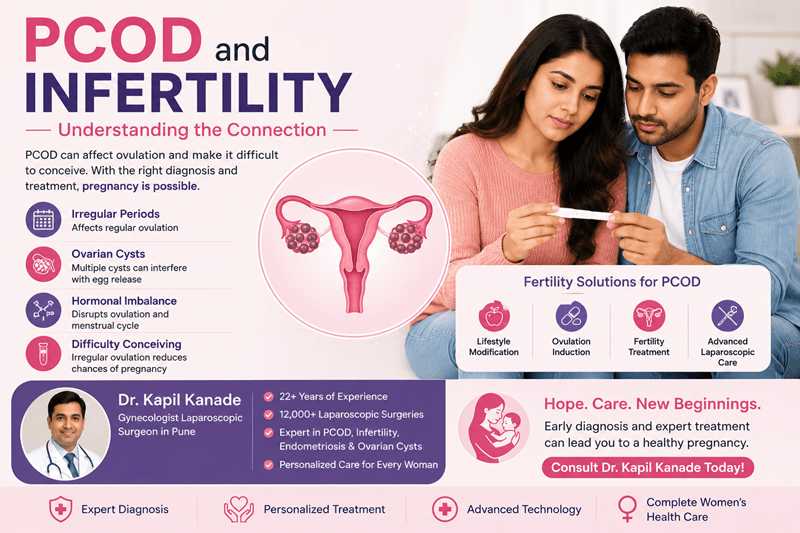
PCOD and Infertility – Understanding the Connection
Polycystic Ovarian Disease (PCOD) is one of the leading causes of infertility among women of reproductive age. Many women diagnosed with PCOD worry about their chances of conceiving naturally. While PCOD can affect fertility, timely diagnosis and appropriate treatment can significantly improve the chances of pregnancy.
If you are planning a pregnancy and struggling to conceive, consulting an experienced gynecologist laparoscopic surgeon in Pune can help identify the underlying cause and create an effective fertility treatment plan.
What is PCOD?
PCOD (Polycystic Ovarian Disease) is a hormonal disorder in which the ovaries produce multiple immature eggs that may develop into small ovarian cysts. These cysts can interfere with the normal release of eggs, affecting ovulation and fertility.
PCOD is becoming increasingly common due to lifestyle changes, stress, obesity, and hormonal imbalances.
How Does PCOD Affect Fertility?
The main reason PCOD affects fertility is irregular or absent ovulation.
For pregnancy to occur, a mature egg must be released from the ovary each month. In women with PCOD, hormonal imbalance may prevent regular ovulation.
As a result:
- Egg release becomes irregular
- Menstrual cycles become unpredictable
- Conception becomes more difficult
- Fertility may be reduced
Signs That PCOD May Be Affecting Fertility
Women with PCOD may experience:
Irregular Periods
One of the most common symptoms associated with fertility problems.
Difficulty Conceiving
Many women struggle to become pregnant despite trying for several months.
Weight Gain
Hormonal changes can contribute to obesity and fertility challenges.
Ovarian Cysts
Multiple ovarian cysts may be detected during ultrasound examination.
Hormonal Imbalance
Abnormal hormone levels may disrupt normal reproductive function.
Can Women with PCOD Get Pregnant Naturally?
Yes.
Many women with PCOD successfully conceive naturally. However, some women may require lifestyle modifications, medications, or fertility-focused treatment to improve ovulation.
Early diagnosis greatly improves pregnancy outcomes.
PCOD and Ovarian Cysts
Women with PCOD often develop multiple small ovarian cysts.
These cysts are usually harmless but may indicate hormonal imbalance affecting ovarian function.
Regular monitoring helps ensure proper reproductive health management.
PCOD, Endometriosis, and Fertility
Some women may have both PCOD and endometriosis.
What is Endometriosis?
Endometriosis occurs when tissue similar to the uterine lining grows outside the uterus.
It can cause:
- Pelvic pain
- Painful periods
- Fertility problems
- Scar tissue formation
The presence of both PCOD and endometriosis can make conception more challenging and may require specialized fertility care.
Understanding Chocolate Cysts
Chocolate cysts are ovarian cysts associated with endometriosis.
These cysts contain old blood and may affect ovarian reserve and fertility if left untreated.
Women experiencing infertility along with pelvic pain should undergo proper evaluation by a gynec laparoscopic surgeon in Pune.
Diagnosis of PCOD-Related Infertility
Accurate diagnosis may include:
Medical History
Evaluation of menstrual cycles and fertility concerns.
Ultrasound Examination
Assessment of ovarian cysts and ovarian health.
Hormonal Blood Tests
Checking reproductive hormone levels.
Ovulation Assessment
Monitoring egg release patterns.
Fertility Evaluation
Comprehensive reproductive health assessment.
Treatment Options for PCOD-Related Infertility
Lifestyle Modifications
Lifestyle improvement is often the first step.
- Weight management
- Healthy diet
- Regular exercise
- Stress reduction
Ovulation Induction
Medications may be used to stimulate ovulation and improve conception chances.
Fertility Treatment
Specialized fertility treatment may be recommended based on individual needs.
Laparoscopic Surgery
In selected cases, minimally invasive laparoscopic procedures may improve fertility outcomes.
Benefits include:
- Faster recovery
- Smaller incisions
- Less pain
- Better reproductive preservation
Why Choose Dr. Kapil Kanade for PCOD and Fertility Care?
Dr. Kapil Kanade is a highly experienced gynecologist laparoscopic surgeon in Pune with expertise in fertility-focused women's healthcare.
Areas of Expertise
- PCOD Management
- Infertility Treatment
- Ovarian Cyst Treatment
- Endometriosis Management
- Chocolate Cyst Treatment
- Advanced Laparoscopic Surgery
Highlights
- 22+ Years of Experience
- 12,000+ Laparoscopic Procedures
- Personalized Fertility Care
- Advanced Minimally Invasive Techniques
When Should You Consult a Fertility Specialist?
Seek medical advice if:
- You have irregular periods
- You have been trying to conceive without success
- You have known PCOD
- You have ovarian cysts
- You experience symptoms of endometriosis
- You have recurrent pregnancy concerns
Early intervention can improve reproductive outcomes.
Book a Consultation
If you are concerned about PCOD and infertility, consult Dr. Kapil Kanade for expert diagnosis and personalized fertility treatment. With the right care and timely intervention, many women with PCOD can successfully achieve pregnancy.