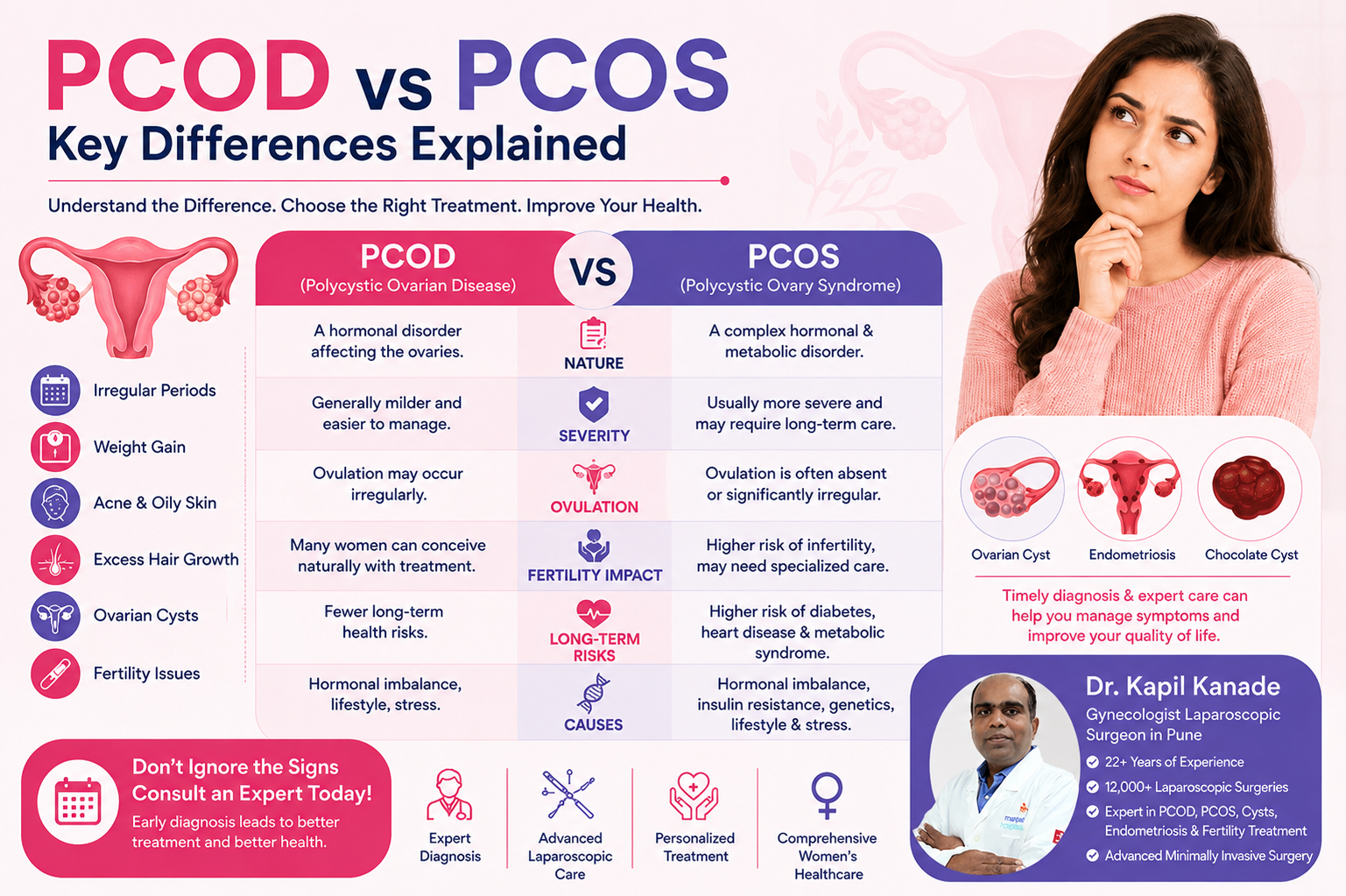
PCOD vs PCOS – Key Differences Explained
Many women use the terms PCOD and PCOS interchangeably. Although both conditions affect the ovaries and hormonal balance, they are not exactly the same. Understanding the difference between PCOD and PCOS is important for proper diagnosis, treatment, fertility planning, and long-term health management.
If you are experiencing irregular periods, weight gain, ovarian cysts, or fertility concerns, consulting an experienced gynecologist laparoscopic surgeon in Pune can help determine the correct diagnosis and treatment approach.
What is PCOD?
PCOD (Polycystic Ovarian Disease) is a condition in which the ovaries produce multiple immature eggs that develop into small ovarian cysts. These cysts can cause hormonal imbalance and irregular ovulation.
PCOD is generally considered a common hormonal disorder that can often be managed effectively through lifestyle modifications and medical treatment.
What is PCOS?
PCOS (Polycystic Ovary Syndrome) is a more complex metabolic and hormonal disorder. It affects the endocrine system and can lead to long-term health complications if left untreated.
Women with PCOS may experience:
- Irregular periods
- Excess facial hair
- Weight gain
- Acne
- Infertility
- Insulin resistance
- Increased risk of diabetes
PCOD vs PCOS: Key Differences
Nature of the Condition
PCOD
A hormonal disorder affecting ovarian function.
PCOS
A metabolic and endocrine syndrome affecting multiple body systems.
Severity
PCOD
Usually milder and easier to manage.
PCOS
Can be more severe and may require long-term treatment.
Ovulation
PCOD
Ovulation may occur irregularly.
PCOS
Ovulation may be significantly disrupted or absent.
Fertility Impact
PCOD
Many women can conceive naturally with proper management.
PCOS
May cause more significant fertility challenges and require specialized treatment.
Long-Term Health Risks
PCOD
Usually has fewer long-term complications.
PCOS
May increase the risk of:
- Diabetes
- High blood pressure
- Heart disease
- Metabolic syndrome
Common Symptoms of PCOD and PCOS
Women with either condition may experience:
- Irregular periods
- Weight gain
- Acne
- Hair thinning
- Excess facial hair
- Difficulty conceiving
- Hormonal imbalance
- Ovarian cysts
Because symptoms overlap, proper medical evaluation is essential.
Role of Ovarian Cysts in PCOD and PCOS
Ovarian cysts are commonly seen in both conditions. However, not all ovarian cysts indicate PCOD or PCOS.
A detailed ultrasound examination helps determine the nature of the cyst and whether treatment is required.
PCOD, PCOS and Endometriosis
PCOD and endometriosis are separate gynecological conditions.
Endometriosis
Endometriosis occurs when tissue similar to the uterine lining grows outside the uterus.
Common symptoms include:
- Severe menstrual pain
- Pelvic pain
- Pain during intercourse
- Fertility issues
Some women may have both PCOS and endometriosis, requiring specialized management.
What are Chocolate Cysts?
Chocolate cysts are ovarian cysts associated with endometriosis.
These cysts contain old blood and may affect ovarian function and fertility.
Women with persistent pelvic pain or infertility should seek evaluation from a gynec laparoscopic surgeon in Pune for accurate diagnosis and treatment.
Diagnosis of PCOD and PCOS
Diagnosis may involve:
Medical History
Assessment of menstrual patterns and symptoms.
Physical Examination
Evaluation of hormonal signs.
Ultrasound Scan
Detection of ovarian cysts and ovarian changes.
Blood Tests
Hormone levels, thyroid function, blood sugar, and insulin levels.
Treatment Options
Lifestyle Modifications
- Healthy diet
- Weight management
- Regular exercise
- Stress reduction
Medical Treatment
- Hormonal medications
- Ovulation-inducing medicines
- Insulin-sensitizing drugs
Fertility Treatment
Women planning pregnancy may benefit from fertility-focused treatment.
Laparoscopic Surgery
In selected cases, minimally invasive laparoscopic procedures may be recommended by an experienced gynecologist laparoscopic surgeon in Pune.
Why Choose Dr. Kapil Kanade?
Dr. Kapil Kanade is a renowned gynecologist laparoscopic surgeon in Pune with over 22 years of experience in managing:
- PCOD
- PCOS
- Ovarian Cysts
- Endometriosis
- Chocolate Cysts
- Fertility Concerns
Highlights
- 22+ Years of Experience
- 12,000+ Laparoscopic Surgeries
- Advanced Minimally Invasive Techniques
- Personalized Women's Healthcare
When Should You Consult a Specialist?
Seek medical advice if you experience:
- Irregular periods
- Weight gain
- Fertility problems
- Ovarian cysts
- Pelvic pain
- Symptoms of endometriosis
Early diagnosis can improve treatment outcomes and protect reproductive health.
Book a Consultation
If you are confused about whether you have PCOD or PCOS, consult Dr. Kapil Kanade for expert diagnosis and personalized treatment. Timely management can help improve hormonal balance, fertility, and overall health.