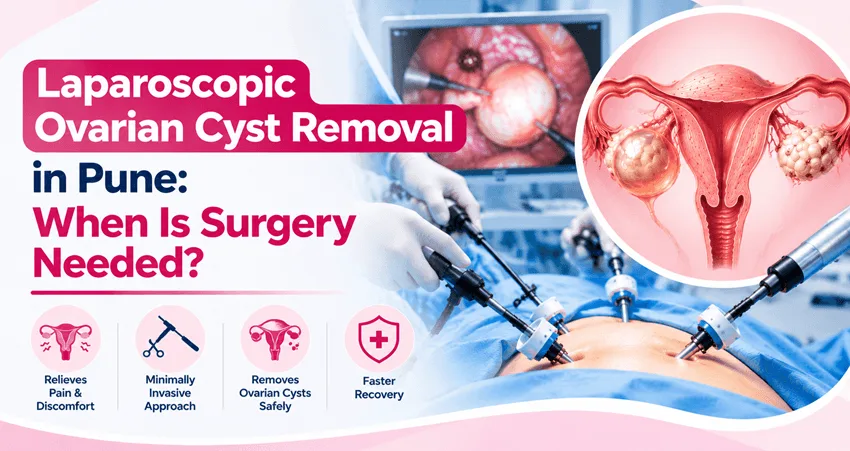
Laparoscopic Ovarian Cyst Removal in Pune: When Is Surgery Needed?
Ovarian cysts are fluid-filled sacs that develop in or on the surface of the ovaries. They are common in women of reproductive age, and many disappear naturally without requiring surgery. However, some cysts may persist, grow larger, cause pelvic pain or have features that require further investigation.
Laparoscopic ovarian cyst removal is a minimally invasive surgical procedure used to remove selected ovarian cysts through small abdominal incisions. For women considering ovarian cyst treatment in Pune, understanding when surgery is necessary, what the procedure involves and how recovery works can help them make informed decisions.
Dr. Kapil Kanade is an obstetrician and gynaecologist whose professional profile lists more than 23 years of experience and specialized training in advanced laparoscopy in Germany. A consultation can help women understand their diagnosis, available treatment options and whether ovarian cyst surgery is appropriate for their individual circumstances.
What Is an Ovarian Cyst?
An ovarian cyst is a sac containing fluid or other material that develops in or on an ovary. Ovaries play an important role in releasing eggs and producing hormones involved in the menstrual cycle and reproductive health.
Many ovarian cysts are functional cysts that develop during the normal menstrual cycle. These commonly resolve on their own. Other cysts may be associated with conditions such as endometriosis or may develop from different types of ovarian tissue.
The treatment depends on the cyst's size, appearance, symptoms, persistence and the patient's age and medical history. An ovarian cyst does not automatically mean that surgery is required.
What Are the Different Types of Ovarian Cysts?
Understanding the type of ovarian cyst helps the gynaecologist determine the appropriate management.
Functional Ovarian Cysts
Functional cysts develop as part of the menstrual cycle. Many are harmless and disappear naturally within a few menstrual cycles. If the cyst has a typical benign appearance and causes no significant symptoms, monitoring may be sufficient.
Endometriomas
Endometriomas are ovarian cysts associated with endometriosis. They contain old blood and may be associated with pelvic pain, painful periods and fertility concerns. Treatment depends on symptoms, cyst characteristics, age and pregnancy plans. Surgery involving an endometrioma requires careful consideration because it can affect ovarian reserve.
Dermoid Cysts
Dermoid cysts, also known as mature cystic teratomas, may contain different types of tissue. Some remain stable, while others grow or cause complications. Surgery may be considered depending on their size, symptoms and imaging findings.
Cystadenomas
Cystadenomas develop from the surface cells of the ovary and may contain fluid or mucus-like material. Some can grow considerably, so follow-up and treatment decisions depend on their size, appearance and symptoms.
Complex Ovarian Cysts
Complex cysts have features that require closer assessment, such as solid components or internal structures seen on imaging. These findings do not automatically indicate cancer, but they may require additional investigations or specialist evaluation to determine the appropriate treatment.
What Are the Symptoms of an Ovarian Cyst?
Many ovarian cysts cause no symptoms and are discovered during a routine examination or ultrasound scan. When symptoms occur, they may vary depending on the cyst's size, location and type.
Pelvic or Lower Abdominal Pain
Some women experience a dull ache, pressure or sharp pain in the lower abdomen. The discomfort may occur on one side and can sometimes become more noticeable during physical activity or menstruation.
Abdominal Bloating or Fullness
A larger cyst may cause a feeling of pressure, fullness or bloating in the abdomen. Persistent or worsening abdominal enlargement should be medically evaluated.
Pain During Intercourse
Certain ovarian cysts may cause pelvic discomfort during or after sexual intercourse. A gynaecologist can assess whether the symptoms are related to a cyst or another condition.
Menstrual Changes
Some women report changes in their menstrual cycle, although irregular periods can have many causes and are not specific to ovarian cysts.
Frequent Urination or Bowel Pressure
A larger cyst may press against the bladder or bowel, causing urinary frequency, abdominal pressure or difficulty with bowel movements.
Sudden, Severe Pelvic Pain
Sudden, intense pelvic pain may indicate an ovarian cyst rupture or ovarian torsion, in which the ovary twists and its blood supply may be affected. This requires urgent medical assessment, particularly when accompanied by nausea, vomiting, dizziness or fainting.
When Is Laparoscopic Ovarian Cyst Removal Needed?
Not every ovarian cyst requires surgery. The decision depends on clinical findings, ultrasound characteristics, symptoms and the potential risks of leaving the cyst untreated.
When the Cyst Persists or Grows
A cyst that remains present on follow-up scans or continues to increase in size may need further evaluation. The gynaecologist will consider whether continued monitoring, additional investigations or surgery is appropriate.
When the Cyst Causes Persistent Pain
Surgery may be considered when an ovarian cyst causes ongoing pelvic pain, pressure or other troublesome symptoms that cannot be adequately managed through conservative treatment.
The treating doctor will assess whether the cyst is likely to be responsible for the symptoms before recommending an operation.
When the Cyst Is Large
Larger cysts may cause discomfort or increase the risk of certain complications, including ovarian torsion. Size alone does not determine the need for surgery; the cyst's appearance, growth, symptoms and other clinical factors are also important.
When Ultrasound Shows Concerning Features
Cysts with complex or suspicious imaging features may require additional investigations and specialist assessment. The goal is to determine the nature of the cyst and choose the safest appropriate treatment.
The surgical approach may differ when there is concern about ovarian cancer. In such cases, referral to an appropriate specialist and careful surgical planning are important.
When an Ovarian Cyst Causes Complications
An ovarian cyst can sometimes rupture or contribute to ovarian torsion. These situations may require urgent treatment, depending on the severity of symptoms and the patient's clinical condition.
Sudden severe pelvic pain should never be ignored or managed solely through a routine appointment.
Can an Ovarian Cyst Go Away Without Surgery?
Yes. Many ovarian cysts, particularly functional cysts, disappear naturally over time. If the cyst has a reassuring appearance and causes no significant symptoms, the gynaecologist may recommend watchful waiting with repeat ultrasound examinations.
The timing of follow-up depends on the type and appearance of the cyst, the patient's age, symptoms and other clinical factors.
If the cyst disappears or becomes smaller, surgery may not be necessary. If it persists, grows or develops concerning features, the treatment plan may need to be reviewed.
Medication may help manage certain symptoms or conditions associated with ovarian cysts, but it does not make every type of cyst disappear. Treatment should be based on the actual diagnosis rather than the presence of a cyst alone.
How Is an Ovarian Cyst Diagnosed?
Accurate diagnosis helps determine whether observation, medication, further testing or surgery is appropriate.
Pelvic Ultrasound
Ultrasound is commonly used to assess the size, location and appearance of an ovarian cyst. It helps the gynaecologist determine whether the cyst appears simple or complex and whether further assessment is needed.
A repeat ultrasound may be recommended to monitor changes over time.
Blood Tests
Blood tests may be advised in selected cases, depending on the cyst's appearance, the patient's age and other clinical findings. CA-125 is one test that may be considered when evaluating certain ovarian masses, but it cannot diagnose ovarian cancer on its own and may be elevated in non-cancerous conditions.
MRI or Other Investigations
MRI or additional investigations may be recommended when ultrasound findings are unclear or more detailed assessment is needed. The choice of tests depends on the suspected type of cyst and the clinical situation.
Medical and Menstrual History
The gynaecologist may ask about pain, menstrual patterns, previous ovarian cysts, previous surgery, family history and plans for pregnancy. This information helps guide the treatment decision.
What Is Laparoscopic Ovarian Cyst Removal?
Laparoscopic ovarian cyst removal, also known as laparoscopic ovarian cystectomy, is a minimally invasive procedure used to remove an ovarian cyst through small abdominal incisions.
The surgeon inserts a thin instrument with a camera, called a laparoscope, into the abdomen. The camera provides a magnified view of the pelvic organs, allowing the surgeon to examine the ovaries and use specialized instruments to remove the cyst when appropriate.
Whenever medically and technically possible, the surgeon aims to remove the cyst while preserving healthy ovarian tissue. However, the appropriate approach depends on the cyst's type, size, appearance and the patient's individual circumstances.
Laparoscopy is commonly considered for cysts that appear suitable for minimally invasive surgery. Open surgery or a different surgical approach may be necessary for very large or suspicious masses or when safe removal through laparoscopy is not appropriate.
How Is Laparoscopic Ovarian Cyst Surgery Performed?
The exact procedure depends on the cyst and the patient's health. The main stages generally include the following.
1. Preoperative Assessment
Before surgery, the gynaecologist reviews the ultrasound findings, symptoms, medical history and any additional investigations. The surgeon explains the planned procedure, potential benefits, risks and alternatives.
The patient's fertility goals should also be discussed, particularly when the cyst affects an ovary or ovarian reserve may be a concern.
2. General Anaesthesia
Laparoscopic ovarian cyst removal is generally performed under general anaesthesia, meaning the patient is asleep during the procedure.
The surgical team monitors the patient's condition throughout the operation.
3. Small Abdominal Incisions
The surgeon makes small incisions in the abdomen to introduce the laparoscope and surgical instruments. Gas is used to create space for better visualization of the pelvic organs.
The camera displays the internal structures on a monitor, helping the surgeon guide the procedure.
4. Removal of the Ovarian Cyst
The surgeon carefully separates and removes the cyst according to its characteristics and the planned technique. The aim is to preserve healthy ovarian tissue whenever possible and appropriate.
If the cyst's appearance or the operative findings raise concerns, the surgeon may need to change the planned approach to ensure safe and appropriate treatment.
5. Examination of the Removed Tissue
The removed tissue may be sent to a laboratory for histopathological examination. This helps establish the nature of the cyst and determine whether additional treatment or follow-up is required.
6. Completion and Postoperative Monitoring
After the procedure, the surgeon closes the incisions and the patient is monitored while recovering from anaesthesia. The hospital stay depends on the extent of surgery, the patient's recovery and any complications.
What Are the Benefits of Laparoscopic Ovarian Cyst Removal?
For suitable patients, laparoscopic surgery offers several potential benefits compared with traditional open surgery.
Smaller Incisions
Laparoscopy uses small abdominal incisions, which generally result in smaller external scars than open surgery.
Less Postoperative Discomfort
Many patients experience less postoperative pain with minimally invasive surgery than with open surgery, although discomfort varies according to the procedure and the individual.
Quicker Recovery in Suitable Cases
Patients undergoing uncomplicated laparoscopic surgery may return to routine activities sooner than those undergoing open surgery. Recovery still depends on the cyst's complexity, the extent of the operation and the patient's health.
Shorter Hospital Stay
Some patients can go home on the same day or after an overnight stay, depending on their condition, the procedure performed and the hospital's discharge criteria.
Potential Preservation of Ovarian Function
When appropriate, the surgeon aims to remove the cyst while preserving healthy ovarian tissue. This can be particularly important for women who wish to become pregnant in the future.
However, ovarian tissue preservation cannot be guaranteed in every case, and the potential impact on fertility should be discussed before surgery.
What Are the Risks of Laparoscopic Ovarian Cyst Removal?
Although laparoscopic ovarian cyst surgery is commonly performed, it carries potential risks.
These may include bleeding, infection, anaesthesia-related complications, blood clots and injury to nearby structures such as the bowel, bladder, blood vessels or ureters.
Other possible complications include damage to healthy ovarian tissue, formation of pelvic adhesions, recurrence of certain cysts or the need for further surgery.
In some cases, the surgeon may need to remove part or all of the affected ovary if preserving it is not safe or feasible. The possibility of this should be discussed before surgery whenever relevant.
If the cyst has features that raise concern about malignancy, the surgical approach and specialist involvement may differ from those used for a cyst that appears benign.
Understanding the expected benefits, risks and alternatives helps patients make an informed decision about treatment.
Recovery After Laparoscopic Ovarian Cyst Removal
Recovery varies from person to person. Many patients recover more quickly after uncomplicated laparoscopic surgery than after open surgery, but the exact timeline depends on the procedure and individual health.
The First Few Days
Mild abdominal discomfort, tiredness, bloating or shoulder discomfort may occur after laparoscopy. The medical team may recommend appropriate pain relief, wound care and gentle walking.
Patients should follow their discharge instructions and take prescribed medicines as directed.
The First One to Two Weeks
Energy levels generally improve gradually. Patients may resume light activities as they feel comfortable, while strenuous exercise and heavy lifting should be avoided until the surgeon advises otherwise.
The time needed to return to work depends on recovery progress and the physical demands of the job.
Following Weeks
Activity can be increased gradually according to the surgeon's advice. Patients should attend follow-up appointments to review healing and discuss the pathology report, if tissue was sent for examination.
Fever, worsening abdominal pain, heavy bleeding, persistent vomiting, difficulty urinating, breathing difficulty or other concerning symptoms require prompt medical assessment.
Does Ovarian Cyst Removal Affect Fertility?
The effect of ovarian cyst removal on fertility depends on the type of cyst, the amount of healthy ovarian tissue involved, the patient's age and other reproductive factors.
For many women, the surgeon can remove a cyst while preserving the ovary. However, surgery can sometimes affect ovarian reserve, particularly when an endometrioma is removed or when cysts involve both ovaries.
Women planning pregnancy should discuss their fertility goals before surgery. Depending on the circumstances, the gynaecologist may recommend additional fertility assessment or consultation with a fertility specialist.
Ovarian cyst removal does not automatically cause infertility, and removing a cyst does not guarantee improved fertility. Treatment should be individualized according to the patient's diagnosis and reproductive plans.
Can an Ovarian Cyst Return After Surgery?
Yes. Some types of ovarian cysts can recur after surgery. The likelihood depends on the type of cyst, the underlying condition and other individual factors.
For example, endometriomas may recur because endometriosis is a chronic condition. Follow-up care helps the gynaecologist monitor symptoms and determine whether additional treatment is required.
Patients should seek reassessment if pelvic pain, abdominal pressure or other symptoms return after surgery.
Laparoscopic Ovarian Cyst Removal Cost in Pune
The cost of laparoscopic ovarian cyst removal in Pune varies depending on the type and complexity of the cyst, the hospital, surgeon and anaesthesia fees, investigations, medicines and duration of hospital stay.
A straightforward cystectomy may involve different resources from surgery for a large, complex or suspicious ovarian mass. Additional specialist assessment and postoperative care may also affect the overall cost.
Patients should request an itemized estimate from the treating hospital and confirm insurance coverage, preauthorization requirements and any exclusions before scheduling surgery.
Why Consider Dr. Kapil Kanade for Ovarian Cyst Consultation in Pune?
Dr. Kapil Kanade is an obstetrician and gynaecologist whose professional profile lists more than 23 years of experience, a fellowship in advanced laparoscopy in Germany and a fellowship in infertility.
Advanced laparoscopic training is relevant when evaluating gynaecological conditions that may require minimally invasive surgery. However, the suitability of laparoscopic ovarian cyst removal depends on the patient's diagnosis, cyst characteristics, medical history and fertility goals.
During a consultation, patients should discuss the nature of the cyst, whether monitoring or surgery is appropriate, the likelihood of preserving the ovary, potential complications and the expected recovery process.
For cysts with suspicious features, the treating team should determine whether further specialist evaluation or a different surgical approach is necessary.
When Should You Consult a Gynaecologist?
A gynaecological consultation is appropriate when an ultrasound identifies an ovarian cyst, when pelvic pain or abdominal pressure persists, or when a previously identified cyst changes in size or appearance.
Women with ovarian cysts who are planning pregnancy should discuss the potential impact of the cyst and any proposed treatment on ovarian function and fertility.
Seek emergency medical care for sudden severe pelvic or abdominal pain, especially when accompanied by vomiting, dizziness, fainting or heavy bleeding. These symptoms may indicate a complication that requires urgent assessment.
Conclusion
Laparoscopic ovarian cyst removal is an important treatment option for selected women with persistent, symptomatic, large or concerning ovarian cysts. However, many ovarian cysts resolve naturally and can be managed with observation and follow-up rather than surgery.
The decision to operate depends on the cyst's type, size, appearance, symptoms and the patient's individual circumstances. When surgery is appropriate, laparoscopic techniques may offer smaller incisions and a quicker recovery in suitable cases, while preserving healthy ovarian tissue whenever possible.
For women considering ovarian cyst treatment in Pune, a detailed consultation with a gynaecologist can help clarify the diagnosis, available treatment options, surgical risks and fertility considerations. The goal is to select a treatment plan that prioritizes safety, ovarian health and the patient's long-term needs.