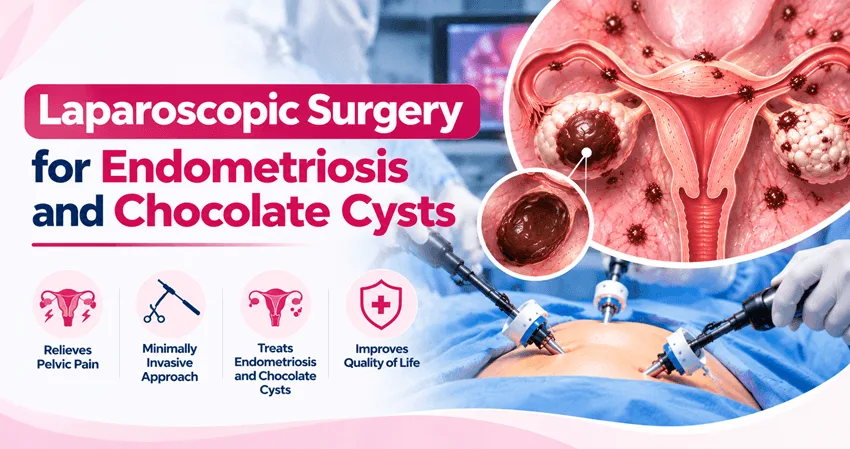
Laparoscopic Surgery for Endometriosis and Chocolate Cysts
Endometriosis is a gynaecological condition in which tissue similar to the lining of the uterus grows outside the uterus. It can affect the ovaries, fallopian tubes and other pelvic structures, sometimes causing painful periods, persistent pelvic pain, discomfort during intercourse and fertility difficulties.
One condition associated with endometriosis is an ovarian endometrioma, commonly known as a chocolate cyst. It contains old blood and may cause pain or other complications in some women. Depending on the symptoms, cyst characteristics and reproductive goals, treatment may involve monitoring, medication, surgery or a combination of approaches.
Laparoscopic surgery is a minimally invasive option used to diagnose and treat endometriosis and selected ovarian chocolate cysts. If you are exploring endometriosis treatment in Pune, understanding the procedure, its potential benefits and risks, and its effect on fertility can help you prepare for an informed discussion with your gynaecologist.
What Is Endometriosis?
Endometriosis occurs when tissue similar to the lining of the uterus grows outside it, commonly around the ovaries, fallopian tubes and pelvic lining. This tissue responds to hormonal changes during the menstrual cycle and may contribute to inflammation, pain and scar tissue formation.
Endometriosis can vary significantly between patients. Some women have mild symptoms, while others experience persistent pain or difficulties becoming pregnant. The severity of pain does not always reflect the extent of the disease.
Common symptoms may include:
Painful menstrual periods that interfere with everyday activities
Persistent or recurring pelvic pain
Pain during or after sexual intercourse
Pain during bowel movements or urination, particularly around menstruation
Abdominal discomfort or bloating
Difficulty becoming pregnant
These symptoms can also occur with other medical conditions. A gynaecological assessment is important to establish the likely cause and discuss appropriate treatment.
What Are Chocolate Cysts?
A chocolate cyst, medically known as an ovarian endometrioma, is a cyst that develops when endometriosis affects an ovary. It often contains thick, dark, old blood, which gives the cyst its common name.
Chocolate cysts are associated with endometriosis, but not every woman with endometriosis develops an ovarian cyst. Some endometriomas cause few symptoms, while others may be associated with pelvic pain, painful periods, discomfort during intercourse or fertility concerns.
A chocolate cyst does not automatically mean that surgery is required. The decision depends on factors such as:
The cyst's size and appearance on imaging
Whether the cyst is growing or causing significant symptoms
Whether the diagnosis is clear or further assessment is needed
The condition of the affected ovary and the other ovary
The patient's age and ovarian reserve
Current or future pregnancy plans
Previous endometriosis treatment and the possibility of recurrence
Your gynaecologist can explain whether monitoring, medical treatment, surgery or specialist fertility advice is appropriate for your circumstances.
When Is Laparoscopic Surgery Recommended?
Laparoscopic surgery may be considered when endometriosis or a chocolate cyst causes significant symptoms, when other treatment has not provided adequate relief, or when the findings require surgical assessment.
A specialist may discuss surgery in situations such as:
Persistent pelvic pain or painful periods that substantially affect quality of life
An ovarian endometrioma that requires treatment after assessment
A cyst with concerning or uncertain imaging features
Suspected endometriosis affecting other pelvic structures
Selected fertility-related situations in which surgery may offer a benefit
The need to confirm a diagnosis or obtain tissue for laboratory examination
Not every chocolate cyst needs to be removed. In some cases, monitoring and symptom management may be appropriate. Surgery also has potential disadvantages, particularly the possibility of reducing ovarian reserve, so the benefits and risks should be considered carefully.
If a cyst has an unusual appearance or cancer is a concern, the surgical plan may differ and further specialist assessment may be necessary.
What Is Laparoscopic Surgery for Endometriosis?
Laparoscopic surgery, often called keyhole surgery, uses a thin camera called a laparoscope and specialised instruments inserted through small abdominal incisions. The surgeon views the pelvic organs on a monitor and may treat visible endometriosis during the same procedure, depending on the consent and surgical plan.
For selected patients, laparoscopic treatment may include:
Excision: Cutting out endometriosis tissue.
Ablation: Destroying selected endometriosis tissue using an appropriate energy source.
Adhesiolysis: Releasing adhesions, or scar tissue, that cause organs to stick together.
Ovarian cystectomy: Removing the endometrioma's cyst wall while attempting to preserve healthy ovarian tissue.
Assessment of pelvic organs: Examining the ovaries, uterus, fallopian tubes and surrounding structures.
The exact procedure depends on the location and extent of endometriosis. Deep disease involving the bowel, bladder or ureters may require detailed imaging and a specialist multidisciplinary surgical team.
How Is Laparoscopic Chocolate Cyst Removal Performed?
When surgery is appropriate, the surgeon plans the procedure according to the cyst's appearance, size, location and relationship to healthy ovarian tissue.
1. Preoperative Assessment
The gynaecologist reviews the patient's symptoms, medical history, previous treatments and fertility goals. Pelvic ultrasound is commonly used to assess an ovarian endometrioma. MRI or additional investigations may be advised when the extent of endometriosis needs further evaluation.
2. Anaesthesia and Small Incisions
The procedure is usually performed under general anaesthesia. Small incisions are made in the abdomen to introduce the camera and surgical instruments.
3. Examination of the Pelvis
The surgeon examines the pelvic organs and identifies the endometrioma and any visible endometriosis or adhesions that need treatment according to the agreed surgical plan.
4. Treatment of the Chocolate Cyst
Depending on the findings, the surgeon may remove the cyst wall or use another suitable technique. The goal is to treat the cyst while preserving as much healthy ovarian tissue as reasonably possible.
Cystectomy may reduce the risk of recurrence compared with drainage alone in some circumstances, but removing the cyst wall can also damage healthy ovarian tissue. The choice of technique should therefore take ovarian reserve and future fertility into account.
5. Treatment of Other Endometriosis
If other endometriosis lesions or adhesions are present, they may be treated during the operation when this is safe, appropriate and part of the agreed plan. More complex disease may require additional specialist support.
6. Recovery and Follow-Up
After surgery, the medical team monitors the patient's recovery and provides instructions about wound care, activity, medication and follow-up appointments. Tissue removed during surgery may be sent for histopathological examination when indicated.
What Are the Benefits of Laparoscopic Surgery?
For appropriately selected patients, laparoscopic surgery may offer several advantages compared with open abdominal surgery.
Smaller Incisions
Keyhole surgery generally uses small incisions, which may result in smaller scars than a conventional open operation.
Potential Relief From Symptoms
Treating endometriosis lesions, adhesions or an ovarian endometrioma may improve pelvic pain and other symptoms. However, symptom relief varies, and pain may persist or return.
Treatment Through a Minimally Invasive Approach
When suitable, laparoscopy may involve less postoperative pain, a shorter hospital stay and a quicker return to everyday activities than open surgery.
Possible Fertility Benefits in Selected Cases
Surgery may improve the chance of spontaneous pregnancy for certain patients with endometriosis. The likely benefit depends on the individual diagnosis and other fertility factors, and surgery is not automatically the best first step for everyone trying to conceive.
Important: The potential benefits must be weighed against surgical risks, particularly the effect that ovarian endometrioma surgery can have on ovarian reserve.
Can Chocolate Cyst Surgery Affect Fertility?
Fertility preservation is an important consideration when treating ovarian endometriomas. Surgery may help selected patients, but removing an endometrioma can also remove or damage some healthy ovarian tissue, potentially reducing ovarian reserve.
Before surgery, your gynaecologist may discuss:
Whether the cyst itself is likely to affect fertility
Your age and reproductive plans
Ovarian reserve assessment when clinically appropriate
Whether surgery is likely to improve your symptoms or fertility prospects
Whether fertility-specialist input is advisable
Whether assisted reproductive treatment should be considered
The potential risks of delaying surgery versus proceeding
If you are planning a pregnancy, mention this before deciding on treatment. The best approach depends on your individual circumstances, including ovarian reserve, the condition of both ovaries, previous operations and any other fertility-related factors.
Can Endometriosis or Chocolate Cysts Return After Surgery?
Yes. Endometriosis is a chronic condition, and symptoms or cysts can recur after surgery. The likelihood of recurrence varies according to the extent of disease, the procedure performed, individual factors and subsequent management.
Your doctor may discuss follow-up appointments, symptom monitoring and hormonal treatment after surgery when appropriate. Hormonal treatment can help manage symptoms and may reduce recurrence risk in some patients who are not trying to conceive immediately.
Hormonal medicines generally do not improve spontaneous pregnancy rates when used as treatment for someone actively trying to conceive. Fertility plans should therefore guide the postoperative treatment strategy.
What Are the Risks of Laparoscopic Surgery?
Although laparoscopy is widely used, it is still surgery and has potential risks. These may include:
Bleeding or infection
Injury to nearby organs, blood vessels, the bowel, bladder or ureters
Anaesthesia-related complications
Adhesion or scar tissue formation
Persistent or recurring pelvic pain
Recurrence of endometriosis or an ovarian endometrioma
Damage to healthy ovarian tissue and a possible reduction in ovarian reserve
The need to change to open surgery if required for safety
The specific risks depend on the extent of disease, previous operations, the cyst's characteristics and the planned procedure. Ask your surgeon to explain the risks that are most relevant to your case.
What Is Recovery Like After Laparoscopic Surgery?
Recovery depends on the type and extent of surgery. Patients may experience temporary abdominal soreness, fatigue, bloating or discomfort around the incision sites. Some people return to everyday activities relatively quickly, while more extensive surgery requires a longer recovery period.
Your surgeon will advise you about:
Wound care and bathing
Pain medication and other prescribed medicines
Gradually increasing daily activities
When to return to work, exercise and sexual activity
Follow-up appointments and any additional treatment
When to seek urgent medical attention
Seek prompt medical assessment if you develop severe or worsening abdominal pain, fever, heavy bleeding, persistent vomiting, wound problems, breathing difficulty or other concerning symptoms.
Do not rely on a fixed recovery timeline without considering the actual procedure performed and your surgeon's instructions.
Laparoscopic Surgery vs Medication for Endometriosis
Surgery is not the only treatment option for endometriosis. The choice depends on the patient's symptoms, examination and imaging findings, fertility goals and response to previous treatment.
| Treatment option | When it may be considered |
|---|---|
| Monitoring | Selected patients with limited symptoms and findings that can safely be followed |
| Pain-relieving medication | Symptom relief as part of an individual treatment plan |
| Hormonal treatment | Managing endometriosis-related pain when appropriate, particularly when pregnancy is not being attempted |
| Laparoscopic surgery | Selected patients who may benefit from treating lesions, adhesions or an endometrioma |
| Fertility assessment or treatment | Patients whose primary concern is difficulty conceiving or who need advice about reproductive options |
These options are not interchangeable for every patient. A doctor can explain the expected benefits, limitations and risks of each approach and whether more than one form of treatment may be needed.
Endometriosis and Chocolate Cyst Treatment in Pune
If you are experiencing painful periods, recurring pelvic pain or have been diagnosed with an ovarian chocolate cyst, a gynaecological consultation can help clarify the diagnosis and available treatment options.
Dr. Kapil Kanade is an obstetrician and gynaecologist with experience in laparoscopic gynaecological surgery. A consultation can help you review your symptoms and imaging, discuss whether surgery may be appropriate, and understand the possible implications for ovarian health and fertility.
When considering laparoscopic surgery, ask about the surgeon's experience with endometriosis and ovarian endometriomas, the proposed technique, ovarian tissue preservation, possible recurrence, recovery and alternative treatments. Complex endometriosis involving the bowel, bladder or ureters may require specialist imaging and a multidisciplinary team.
The aim is to choose a treatment plan based on your symptoms, clinical findings and priorities rather than assuming that every cyst or every case of endometriosis requires surgery.
Conclusion
Laparoscopic surgery can be an effective treatment option for selected patients with endometriosis and ovarian chocolate cysts. It may help manage pain, treat visible disease and address certain fertility-related concerns, but it also carries risks, including the possibility of reduced ovarian reserve and recurrence.
If you are considering endometriosis or chocolate cyst treatment in Pune, discuss your symptoms, scan findings, fertility goals and treatment alternatives with a qualified gynaecologist. An individualised assessment can help determine whether monitoring, medication, laparoscopic surgery or fertility-specialist input is most appropriate for you.
Medical disclaimer: This article is for general educational purposes only and does not replace a medical consultation, diagnosis or personalised treatment advice.